Matthew J. Sanders, Clinical Educator and Environmental Law Scholar, Appointed to Stanford Law Faculty – SLS News and Announcements

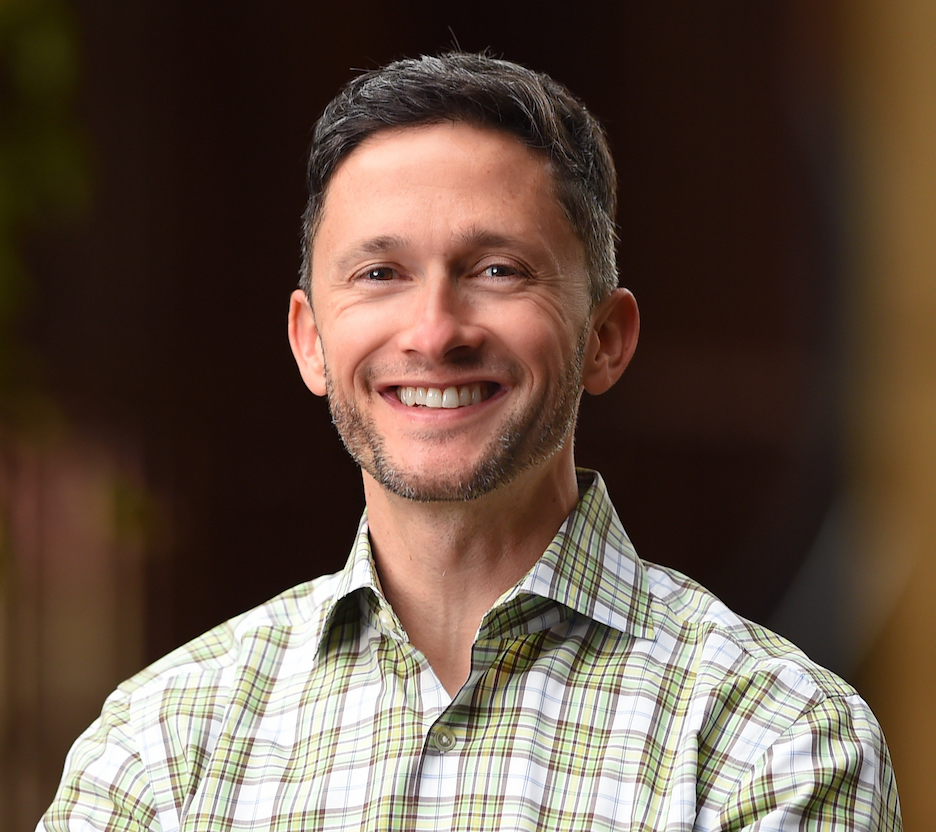
August 22, 2025 – Stanford, CA – Stanford Law School announced today that Matthew J. Sanders, JD ’02, has joined the faculty as an assistant professor of law. The appointment marks a new chapter in Sanders’s enduring connection to Stanford Law School, where he began his legal career as a student, returned as a lecturer, and most recently served as acting deputy director of the school’s Environmental Law Clinic.
In his new role, Sanders will co-lead the clinic alongside Deborah Sivas, the Luke W. Cole Professor of Environmental Law, and will continue teaching environmental law and advanced legal writing classes.
“Stanford Law is where I learned to be a lawyer, so stepping into this new role feels deeply meaningful,” said Sanders, an Oregon native who studied history and environmental policy as an undergraduate and worked at the U.S. Environmental Protection Agency before law school. “I’m grateful for the opportunity to continue working with our extraordinary students and clients, helping them tackle complex, high‑stakes environmental challenges while preparing them to be thoughtful, skilled advocates.”
Earlier in his legal career, Sanders served as an appellate attorney in the Environment and Natural Resources Division of the U.S. Department of Justice, as a deputy county counsel for the County of San Mateo, an attorney in private practice, and a clerk for Judge Consuelo M. Callahan of the U.S. Court of Appeals for the Ninth Circuit. He joined the Environmental Law Clinic in 2013, and the 2025-2026 academic year marks his ninth year teaching full-time at Stanford Law School.
“Matt has an exceptional combination of practical expertise, scholarly insight, and deep commitment to public service,” said George Triantis, JSD ’89, the Richard E. Lang Professor of Law and Dean of Stanford Law School. “He is a devoted instructor and inspiring mentor to students in the Environmental Law Clinic and across the law school and we’re fortunate to have his energy, dedication and experience on our faculty.”
Over his years with the Environmental Law Clinic, one of Stanford Law’s 11 fulltime Mills Legal Clinics, Sanders has guided students through numerous high-stakes matters, including those involving public lands, endangered species, and farmworker community protection. Among the clinic’s achievements under his supervision was a Ninth Circuit victory in the Clinic’s 30-year effort to protect the Medicine Lake Highlands from large‑scale geothermal development. Among other matters, he is currently working with clinic client the National Parks Conservation Association to challenge a proposed groundwater-intensive hydroelectric project on the edge of Joshua Tree National Park.
Read about the Medicine Lake Highlands Case
“Virtually all of the matters we take on are really challenging and cutting-edge.” Sanders said. “There is often no precedent, or the law is unfavorable, and the stakes are high. All this means that our matters are excellent learning opportunities for our students and, of course, really important for our clients.”
Sanders’s academic research and scholarship focuses on environmental law, administrative law, and clinical and legal practice. His most recent article, “Rethinking the Administrative-Remand Rule,” forthcoming in Volume 78 of the Stanford Law Review (2026), takes on the little-discussed administrative-remand rule in the federal courts of appeals. The article argues that modest reforms to the rule could yield more consistent and just decisions across the circuits in cases involving remands to federal agencies under the federal Administrative Procedure Act.
“I’m very interested in how the law can be concretely improved to yield better outcomes and be more workable,” Sanders said.
About Stanford Law School
Stanford Law School is one of the world’s leading institutions for legal scholarship and education. Its alumni are among the most influential decision makers in law, politics, business, and high technology. Faculty members argue before the Supreme Court, testify before Congress, produce outstanding legal scholarship and empirical analysis, and contribute regularly to the nation’s press as legal and policy experts. Stanford Law School has established a model for legal education that provides rigorous interdisciplinary training, hands-on experience, global perspective and a focus on public service.
link


![Locum tenens offers physicians a path to freedom [PODCAST]](https://kevinmd.com/wp-content/uploads/Design-4-scaled.jpg "Locum tenens offers physicians a path to freedom [PODCAST]")