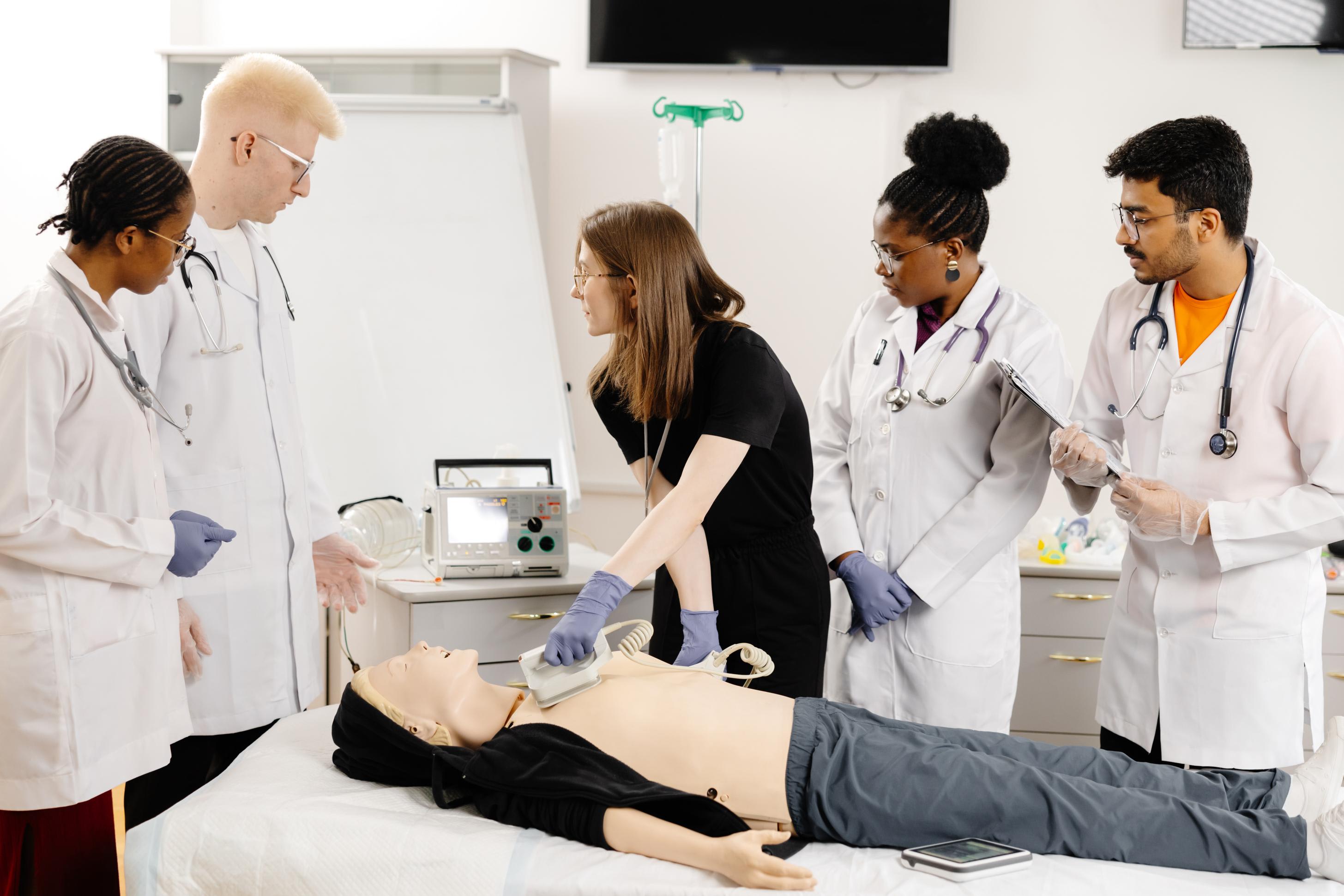
Best Career Options for Doctors in 2025

The practice of medicine has long been considered one of the most noble and intellectually demanding vocations. Historically, advancement for physicians followed a linear path, completing an MBBS, pursuing a postgraduate specialisation, and entering hospital or clinic-based roles. However, in 2025, this landscape is far more dynamic. The globalisation of healthcare, digital transformation, and emerging subspecialties have expanded the boundaries of what doctors can do and where they can make an impact.
For the doctor in India, especially the MBBS and MD holder, the choice is no longer simply “Which branch should I choose?” but rather “What kind of contribution do I wish to make to medicine and how can I best equip myself to do it?” The range of career options available today is large and dynamic, encompassing clinical excellence, academic leadership, policy advisory, technological innovation, and beyond.
The Expanding Role of Doctors in 2025
Doctors now work across a spectrum of roles that extend far beyond the consultation room or operating theatre. In addition to providing direct patient care, they are involved in healthcare delivery design, digital health implementation, regulatory guidance, population health strategy, and medical education. Many also play a pivotal role in shaping healthcare policy and participating in interdisciplinary teams that design public health interventions, health apps, AI-based diagnostics, and data-informed treatment protocols.
This widening scope of medical practice reflects the increasing complexity of healthcare systems and the recognition that improving health outcomes requires input from professionals with clinical insight and systems-level thinking.
What’s Driving Change in Medical Career Pathways?
The evolution of medical careers is not arbitrary. A number of structural and systemic influences are shaping physicians’ interaction with the health sector:
Rising healthcare demand across both urban and rural regions has led to greater decentralisation of care, requiring a more diverse range of medical professionals to meet population needs.
- Chronic and lifestyle-related illnesses now account for a significant proportion of disease burden in India. This shift demands expertise in areas such as diabetology, oncology, mental health, and geriatric medicine.
- Telemedicine and digital health infrastructure have made healthcare more accessible and data-driven, allowing physicians to monitor, manage, and consult patients efficiently and remotely.
- Global mobility and credentialing pathways such as MRCP, FRCR, and international postgraduate diplomas have made it feasible for Indian physicians to pursue careers abroad or align their skills with global standards.
- Growing interest in interdisciplinary and technology-enabled roles has opened up new opportunities in artificial intelligence, clinical informatics, and digital therapeutics fields ,where clinical expertise is increasingly valued.
Core Categories of Career Opportunities for Doctors
Rather than viewing medical careers as fixed tracks, it is now more appropriate to think in terms of thematic domains where doctors can apply their training, either traditionally or through adapted roles.
1. Clinical Practice
Traditional clinical roles remain central. These include general practice, internal medicine, paediatrics, surgery, and other specialist paths, typically pursued through MD, MS, or DNB routes. For many doctors, these provide the deepest patient interaction and clinical fulfilment.
2. Diagnostic and Allied Clinical Fields
Fields such as radiology, pathology, oncology, and palliative medicine are essential to diagnosis, treatment planning, and long-term care. These areas often require both technical proficiency and a strong grounding in systemic disease processes, and are among the most respected medical subspecialties in demand in 2025.
3. International and Online Upskilling Routes
Global postgraduate examinations and online diploma programmes have opened up accessible upskilling options for doctors seeking international mobility or advanced knowledge. These structured, academically rigorous options are not substitutes for core degrees, but they enable doctors to specialise further or build cross-border competencies.
4. Research, Academia, and Medical Innovation
Physicians with a strong academic background can choose careers in teaching, clinical research, or translational science. Many are involved in clinical trials, outcome studies, and the development of new therapies. This path offers intellectual engagement and the opportunity to shape future medical practice.
5. Leadership and Healthcare Management
Those with organisational and strategic abilities may gravitate towards hospital administration, clinical governance, or health systems management. These roles involve decision-making at the intersection of clinical efficacy, resource allocation, and public health policy.
6. Digital Health and Technology-Enabled Care
Digital health is no longer a niche; it is a core component of 21st-century healthcare. Doctors today are involved in designing and evaluating digital tools, interpreting health data, and consulting via telehealth platforms. This space also includes AI-assisted diagnostics, wearable tech applications, and chronic disease management platforms.
7. Non-Clinical but Medical-Aligned Careers
Many doctors choose to work outside direct clinical care while still applying their medical knowledge. These roles include medical writing, healthcare consulting, regulatory affairs, medico-legal advisory, health journalism, and pharmaceutical strategy. For some, such alternative career options after MBBS offer better work-life balance, intellectual engagement, or global exposure.
Top Specialisation as a Strategic Career Move
Selecting a medical specialisation is perhaps the most significant decision in the career path of a physician. Beyond shaping clinical responsibilities, this decision often determines research engagement, long-term career flexibility, and one’s contribution to advancing a particular field of medicine. Each discipline offers distinct intellectual challenges, procedural demands, and opportunities for impact, making informed selection vital.
1. Radiology
Radiology remains central to modern diagnostics, playing a pivotal role in disease detection, treatment planning, and interventional procedures. As imaging technology continues to evolve, the demand for well-trained radiologists has grown steadily across tertiary care hospitals and diagnostic centres. Specialised courses for radiology now provide structured training in interpretation techniques, cross-sectional imaging, and emerging modalities such as AI-assisted diagnostics.
2. Dermatology
Dermatology encompasses both medical and procedural care, dealing with conditions affecting the skin, hair, and nails. In addition to managing chronic dermatological diseases, many dermatologists also practise aesthetic dermatology, making it a dual-focus discipline. With rising demand in both clinical and elective contexts, flexible and focused dermatology courses offer valuable exposure to this diverse speciality.
3. Anaesthesiology
Anaesthesiology forms the backbone of surgical and perioperative medicine. Anaesthetists ensure patient safety during operative procedures and are increasingly involved in critical care, trauma resuscitation, and pain management services. The scope of the field requires not only clinical vigilance but collaborative expertise. Advanced anesthesia courses can enhance competence in pharmacology, airway management, and regional techniques, particularly for doctors pursuing intensive care or operative medicine pathways.
4. Psychiatry
Psychiatry is a rapidly evolving field focused on the diagnosis and management of mental health conditions. With growing recognition of psychological well-being and a reduction in societal stigma, psychiatry is now considered essential to comprehensive care. Modern psychiatry courses offer practical frameworks for managing mood disorders, psychoses, and behavioural health conditions, especially relevant in primary and community settings.
5. Dentistry
Dentistry, while distinct in its undergraduate training path, remains a crucial branch of healthcare. It includes general dental practice, as well as specialities such as endodontics, prosthodontics, and oral surgery. The field balances preventive care with procedural precision. For clinicians or medical educators interested in cross-disciplinary exposure or academic teaching, a foundational dentistry course may offer valuable orientation.
6. Cardiology
Cardiology continues to be a high-impact, high-demand speciality. As cardiovascular disease remains a leading cause of mortality, cardiologists play a key role in diagnostics, interventional procedures, and long-term risk management. Structured cardiology courses provide focused learning in ECG interpretation, echocardiography, clinical pharmacology, and emerging technologies such as cardiac imaging and remote monitoring.
7. Emergency Medicine
Emergency Medicine is indispensable in high-acuity settings such as trauma centres and urban emergency departments. Physicians in this field must be adept at rapid assessment, resuscitation, and stabilisation. Given its broad scope, which includes internal medicine, surgery, and critical care principles, courses for emergency medicine can provide foundational knowledge and decision-making frameworks for time-sensitive clinical scenarios.
8. Neurology
Neurology focuses on disorders of the brain, spinal cord, and peripheral nervous system. Neurologists manage a wide range of conditions from strokes and epilepsy to neurodegenerative diseases and movement disorders. With an ageing population and increasing awareness of neurological health, demand for skilled professionals in this field continues to grow. Targeted neurology courses offer an in-depth understanding of clinical localisation, diagnostic testing, and evidence-based treatment pathways.
9. Ophthalmology
Ophthalmology is a surgical and outpatient speciality dedicated to disorders of vision and ocular structures. It combines procedural precision with long-term patient relationships and has wide relevance in both public and private health systems. Doctors pursuing ophthalmology courses gain essential skills in eye examination, imaging, surgical planning, and the management of conditions such as cataracts, glaucoma, and retinal disease.
Orthopaedics addresses musculoskeletal disorders, including fractures, joint disease, spinal conditions, and trauma-related injuries. It is a highly procedural speciality requiring anatomical expertise, operative skill, and rehabilitation planning. With an ageing population and rising demand for joint replacements and sports injury care, orthopaedics is among the most sought-after postgraduate pathways. Specialised orthopedic courses provide comprehensive learning in biomechanics, operative techniques, and postoperative care essential for clinical excellence.
OC Academy offers domain-focused, internationally recognised online programmes in many of these fields, supporting clinicians in acquiring advanced, clinically relevant skills in a flexible format. These represent some of the best medical specialisations for doctors, enabling practitioners to deepen expertise while aligning with emerging healthcare needs, both in India and globally.
Making the Right Choice: Factors to Consider
There is no single “best” pathway; there is only one that aligns with a doctor’s interests, competencies, and values. Doctors must consider:
- Clinical interest and aptitude: Enjoyment and strength in particular disciplines
- Work–life integration: Some specialisations are more predictable than others
- Career longevity and flexibility: Whether a path allows transitions in the future
- Geographic mobility: International recognition of qualifications
- Financial expectations: While not primary for all, compensation may guide feasibility
It is crucial to consider not just the next step, but the broader arc of a professional life in medicine.
Career Guidance Based on Stage and Background
For MBBS Graduates
Doctors at this stage often explore core postgraduate degrees through NEET-PG or INI-CET. Others may pursue international examinations such as PLAB, MRCP, or opt for focused online diplomas to gain domain-specific insight. These are useful stepping stones to explore specialisation before committing to longer residency programmes.
For MD or DNB Doctors
Having completed a core specialisation, these professionals may consider superspecialisation, international fellowships, or leadership roles in clinical education and hospital governance. Research-focused careers or hybrid roles in industry are also viable.
For Those Exploring a Shift
Some doctors, due to lifestyle, interest, or burnout, choose to transition into roles with less clinical intensity. This may involve medical publishing, pharmaceutical research, academic mentoring, or working for public health NGOs. These non-clinical jobs for doctors are increasingly respected and impactful.
Why Career Planning Matters More Than Ever
In the modern medical setting, passive career development is no longer an option. In the modern medical setting, passive career development is no longer an option. With increasing global connectivity, technological acceleration, and demand for interprofessional skills, thoughtful planning is essential to avoid career stagnation.
Strategic upskilling, such as through OC Academy’s online programme, allows doctors to make informed, future-ready transitions without stepping away from their core responsibilities. For those asking, “What can I do after MBBS?” or seeking career options after MBBS and MD, the key is to align personal aspirations with global healthcare trends and emerging patient needs.
Conclusion
Medical careers in 2025 are defined not by constraint, but by choice. Whether pursuing a high-acuity specialisation, contributing to research and education, or embracing innovation in digital health, doctors today have a wide array of avenues to explore.
The challenge lies not in the availability of options, but in selecting pathways that offer both personal fulfilment and professional impact. With thoughtful planning and purposeful upskilling, today’s doctors can chart careers that are clinically relevant, globally aligned, and deeply meaningful.
If you are exploring structured, internationally recognised learning pathways, OC Academy offers a range of academic programmes designed to support lifelong clinical and professional growth across traditional and emerging fields of practice.
FAQs
1. What are the most in-demand medical specialisations for doctors in 2025?
In 2025, specialisations such as radiology, dermatology, cardiology, emergency medicine, neurology, psychiatry, and orthopaedics continue to see strong demand due to their clinical importance, procedural depth, and relevance to rising healthcare needs.
2. Can I pursue a medical career abroad after completing MBBS in India?
Yes, Indian doctors can pursue international careers through recognised pathways such as PLAB (UK), MRCP, FRCR, or by enrolling in postgraduate diploma courses aligned with global healthcare standards. These credentials improve both clinical expertise and global mobility.
3. What are some viable non-clinical career options for doctors?
Doctors interested in non-clinical roles may explore opportunities in medical writing, public health, clinical research, healthcare consulting, regulatory affairs, or teaching. These paths allow continued use of medical expertise while offering diverse professional environments.
4. Is it necessary to specialise after MBBS, or are there other pathways?
While specialisation is a common route, there are alternative career options after MBBS that include pursuing short-term diplomas, international certifications, or roles in public health and digital health. These pathways can be valuable, especially when aligned with long-term goals.
5. How do I choose the right medical specialisation for my career?
Choosing a specialisation should be based on a combination of clinical interest, aptitude, lifestyle preferences, long-term career vision, and evolving healthcare trends. Exploring structured courses or shadowing experiences can also provide clarity before committing to a path.
link
![Locum tenens offers physicians a path to freedom [PODCAST]](https://kevinmd.com/wp-content/uploads/Design-4-scaled.jpg "Locum tenens offers physicians a path to freedom [PODCAST]")

![Sabbaticals provide a critical lifeline for sustainable medical careers [PODCAST]](https://kevinmd.com/wp-content/uploads/The-Podcast-by-KevinMD-WideScreen-3000-px-3-scaled.jpg "Sabbaticals provide a critical lifeline for sustainable medical careers [PODCAST]")